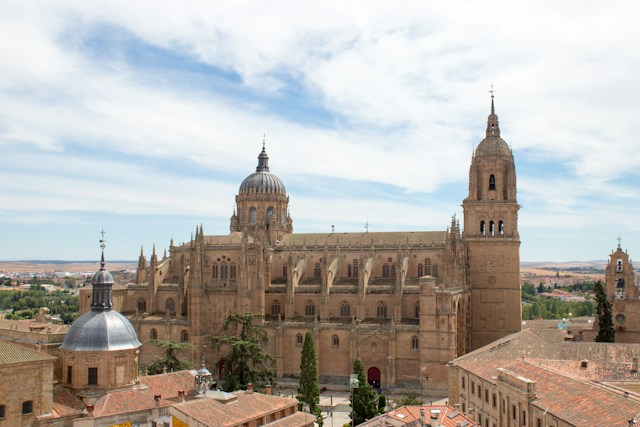
Most travellers arrive in Salamanca, walk around the Plaza Mayor, take a photo of the cathedral and leave the next day. It is a pity, because this is only the beginning of the story. The province hides mountain villages with painted wooden balconies, deep canyons on the Portuguese border and small kitchens where grandmothers still cook like fifty years ago.
Salamanca city: little things you can easily miss
Everybody looks for the famous frog on the university façade (it is there, between the carvings, and tradition says finding it without help brings good luck). But look also at the Casa de las Conchas, covered with around 300 stone shells, or at the Cielo de Salamanca, an old painted ceiling with zodiac signs that survives from the 15th century. A local legend says the devil himself gave classes in a cave under the city, the Cueva de Salamanca. Nobody can prove it, of course, but it is a good story for the evening walk.
For lunch, skip the restaurants with photos on the menu. Look for the small bars around the old town where they serve hornazo, a savoury pie filled with pork loin, chorizo and egg. Locals eat it outdoors on the Monday after Easter, the famous Lunes de Aguas. Casa Paca, near the Plaza Mayor, is a classic for traditional dishes.
Best time to visit: April to June, and September to October. In August it is very hot, and in winter it is cold but quiet and beautiful.
The Sierra de Francia: villages that look like a painting
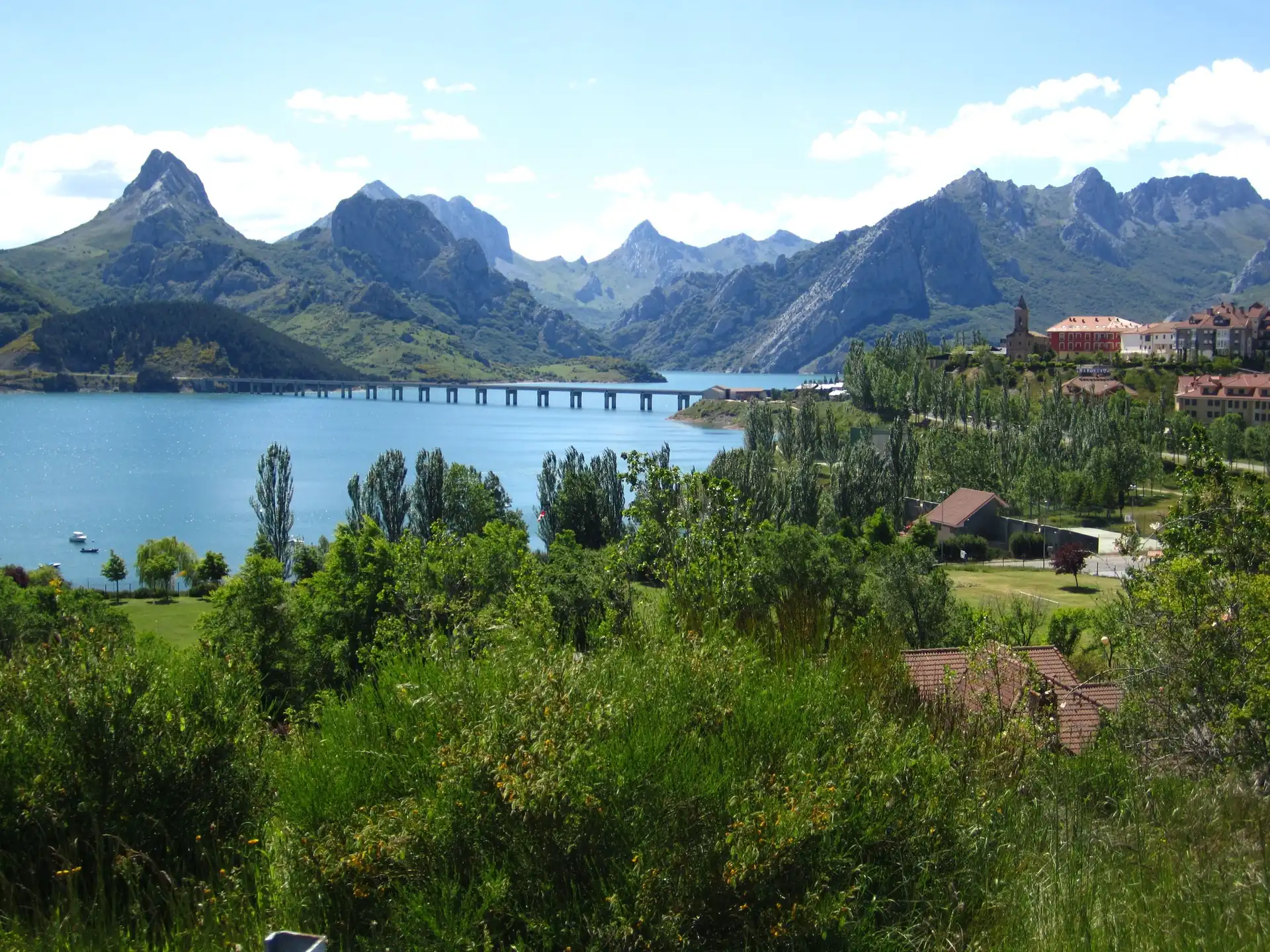
Only one hour from the city, the landscape changes completely. Oak and chestnut forests, stone houses, granite and timber. This is where our clients usually say “wow” for the first time.
La Alberca was the first village in Spain declared a historic site, in 1940. The streets are full of balconies with flowers and half-timbered walls. The most curious resident is a pig, the Gocho de San Antón, who walks free around the village and is cared for by all the neighbours. Yes, really.
Mogarraz is, for many people, the most surprising. Hundreds of black and white portraits of the villagers hang on the house walls, a project by the artist Florencio Maillo. You walk the narrow streets and feel that the neighbours are watching you, in a nice way.
Miranda del Castañar still has its medieval walls and gates and almost no tourists, even in summer. And San Martín del Castañar has a tiny, very old bullring in the middle of the village, which is one of the oldest in Spain.
In these villages, try patatas meneás (mashed potatoes with paprika and crispy bacon), farinato (a spiced sausage with bread crumbs) and the local mountain wines. Many family restaurants have just five or six tables and a handwritten menu, so book ahead if you can, or let your travel designer do it for you.
Best time to visit: October and early November for chestnuts and golden forests, and May for green hills and fresh air.
Candelario and Guijuelo: mountains and ham
Candelario, at the foot of the Sierra de Béjar, is famous for its steep streets with little water channels and its batipuertas, small half-doors that protect the houses from the cold. Nearby Guijuelo is one of the most important places in Spain for Iberian ham. Many producers let you visit the cellars with a tasting, which is a perfect plan for food lovers.
Ciudad Rodrigo and the Arribes: the border with Portugal
Ciudad Rodrigo has one of the best preserved walls in Spain, and you can walk along the top at sunset almost alone. If you visit in February, the Carnival del Toro is a wild and very local experience.
Then go west to the Arribes del Duero, a natural park where the river Duero cuts deep canyons between Spain and Portugal. Look for the waterfall of Pozo de los Humos, near Pereña de la Ribera, and the viewpoints near Saucelle. The best moment is late February or March, when the almond trees bloom, or autumn for colour. From here, it is very easy to continue into northern Portugal and the Douro Valley, which is one of the reasons our tailor made tours through Spain and Portugal work so well in this area.
Questions travellers often ask
How many days do I need for Salamanca and its province?
Two days for the city is enough. If you want the villages and the Arribes, plan four or five days. Many people stay one night in a small rural hotel in the mountains, and this changes the experience completely.
Do I need a car?
For the villages, yes, or a private driver. Public transport is limited. That is why many guests choose custom holidays in Spain and Portugal with transfers and local guides included.
Is it good for a first trip to Spain?
It is better for the second trip, or for people who want a calm and authentic side of the country. But we also combine it with Madrid, Segovia or Porto very easily.
What should I eat?
Hornazo, farinato, chanfaina, Iberian ham from Guijuelo and, in autumn, anything with chestnuts. Leave space for dessert, especially convent sweets.
Can I travel in winter?
Yes. It is cold, but the villages are almost empty and the food is perfect for the weather.
Make it yours
Places like these are difficult to organise alone, because the best experiences are small: a private tasting with a ham producer, a table in a family restaurant that does not appear online, a local guide who knows the stories behind the portraits of Mogarraz. At Hidden in Spain we design luxury custom trips in Spain and Portugal, built around your tastes, your rhythm and the right season for each place. If you want to discover the real Salamanca, away from the crowds, contact our team at hiddeninspain.com and we will prepare a tailor made itinerary just for you.